Preparing Your Property for Residential Demolition
Demolition day doesn’t start when the excavator rolls in — it starts weeks before with proper preparation. Whether you’re tearing down a deteriorated structure, clearing a lot for new construction, or removing an old mobile home, taking the right steps beforehand keeps your project on schedule, on budget, and fully compliant with local regulations.
Here’s what every Wilmington-area homeowner should know before the crew arrives.
Secure Your Demolition Permit
In New Hanover County and the City of Wilmington, most demolition projects require a permit from the local inspections department. The application typically requires a site plan, proof of ownership, and — for structures with utilities — confirmation that all services have been disconnected. Your demolition contractor should be familiar with the local process and can often handle the paperwork on your behalf.
Barnes Demolition coordinates directly with local permitting authorities so you don’t have to chase down forms or stand in line at the county office.
Disconnect All Utilities
Before any structure comes down, every utility connection must be formally disconnected — not just turned off. This includes electricity, natural gas, water, sewer, and any telecommunications lines. Each utility provider has its own timeline for disconnection, so start this process at least two to three weeks before your target demolition date.
Contact Duke Energy, Cape Fear Public Utility Authority, and Piedmont Natural Gas directly, or ask your contractor to coordinate on your behalf. This step is non-negotiable for safety.
Address Hazardous Materials
Homes built before 1980 may contain asbestos in insulation, floor tiles, siding, or roofing materials. Lead-based paint is also common in pre-1978 structures. North Carolina requires a certified asbestos inspection before demolition of most residential structures.
If hazardous materials are found, they must be abated by a licensed removal contractor before the core demolition process begins. This adds time and cost, but it’s required by law and protects everyone on the site and in the surrounding neighborhood.
Clear Personal Property and Salvageables
Walk through the structure and remove anything you want to keep — fixtures, appliances, hardware, lumber, or sentimental items. Once the excavator starts, there’s no going back. If there are reusable materials like hardwood flooring, vintage fixtures, or copper plumbing, consider salvaging them before demo day. Habitat for Humanity ReStore will even pick up qualifying donations.
Prepare the Site for Equipment Access
A residential demolition crew typically needs a clear path at least 12 feet wide for equipment access. Move vehicles, fencing, garden structures, and any items in the driveway or side yard that could obstruct the crew. If your property has tight access, mention it when you request your estimate — Barnes Demolition operates compact excavators specifically designed for residential lots with limited clearance.
Notify Your Neighbors
This isn’t legally required in most cases, but it’s the right thing to do. A quick conversation or note letting adjacent property owners know about the timeline, expected noise, and dust mitigation measures goes a long way toward maintaining good relationships. Your contractor should have dust suppression and debris containment measures in place, but neighbors appreciate a heads-up.
What to Expect on Demolition Day
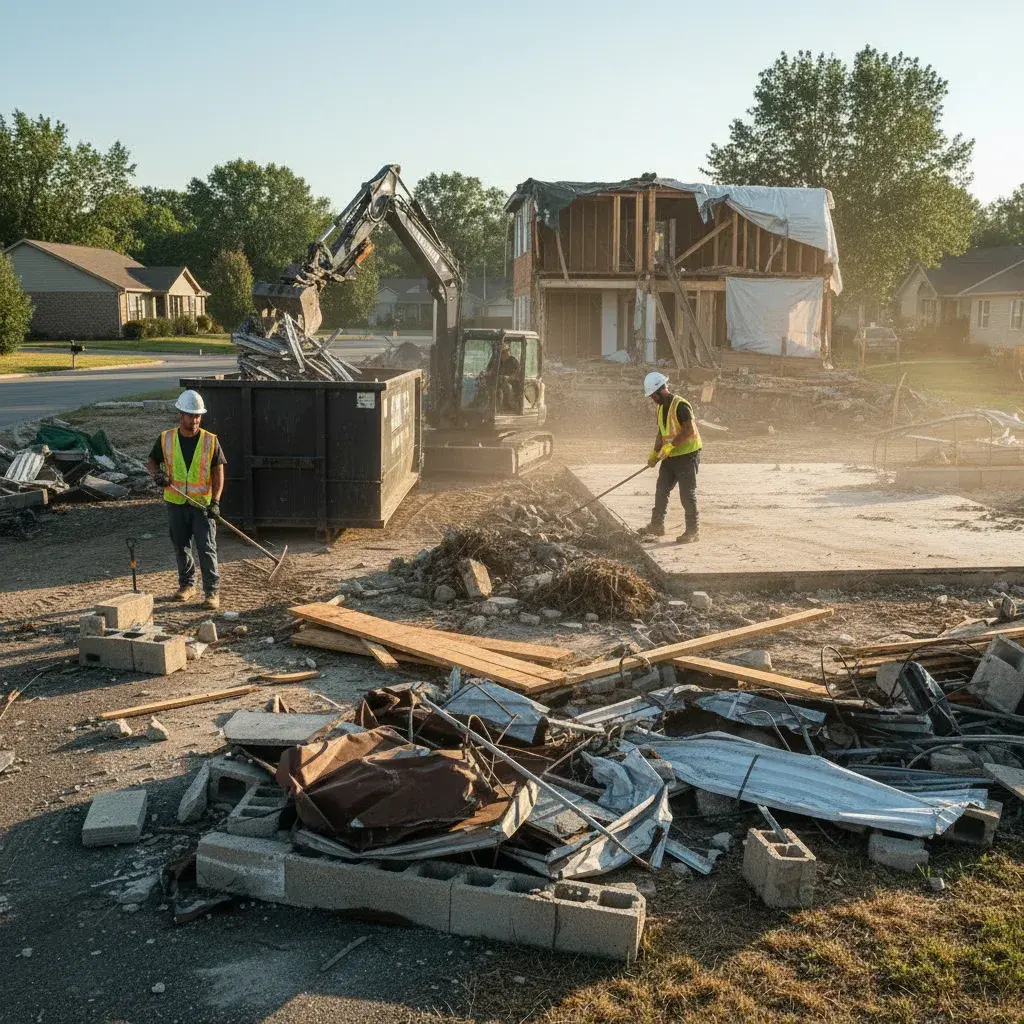
The crew will arrive, confirm the scope, and establish safety perimeters. Demolition typically progresses from the top down and interior out. Debris is loaded into trucks and hauled to permitted disposal facilities. For a standard residential teardown, the structure is usually down and the lot cleared within one to three days depending on size and complexity.
Ready to start planning your project? Give us a call — Barnes Demolition provides free on-site estimates for all residential demolition in the Wilmington area.